


 Italiano
A physical asset is a tangible item that contributes to an organization’s objectives: plant, a pump, a vehicle, mobile equipment or furniture. Registering it means making the individual item recognizable and collecting information that helps people use it, maintain it and decide when to replace it.
Which items to include
Section titled “Which items to include”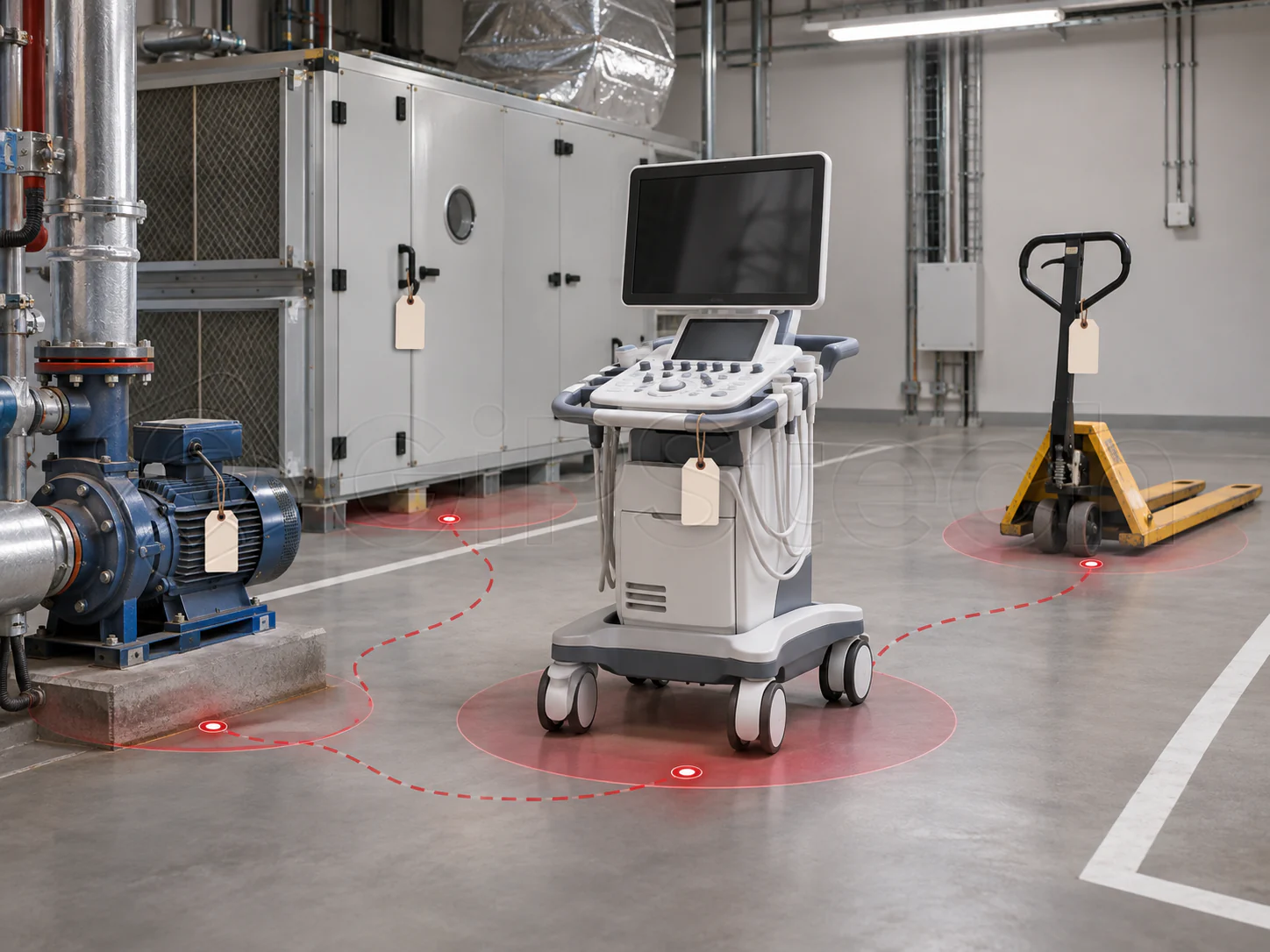
The perspective of ISO 55000:2024 (opens in a new tab) connects assets to the value they can provide to an organization. This article focuses on physical items: value may mean service continuity, production capacity or having equipment available when needed. It does not necessarily match the purchase price.
What to register depends on the decisions to be made. A pump maintained independently deserves a separate record; a screw can usually remain part of an assembly. An inexpensive tool required for an inspection may need an individual identity. The useful question is: must this particular item be distinguished, assigned work or given its own history?
UNI EN 13306:2018 (opens in a new tab), currently in force, provides general maintenance terminology. It helps people use terms consistently but does not by itself determine the detail of an organization’s asset register.
Operational assets and accounting records
Section titled “Operational assets and accounting records”An operational register answers questions such as “where is it?” and “what work has it received?”. A fixed asset register serves accounting purposes. The two lists may describe the same property using different groupings: plant purchased as one unit may contain several independently maintained components.
Stable identifiers can link the records without requiring every accounting entry to correspond to one technical record. Rented equipment may also need operational management. Accounting recognition and valuation remain a separate matter for the responsible specialists.
Information that makes the register useful
Section titled “Information that makes the register useful”A proportionate starting point includes:
- Identity: unique internal code, description, family, manufacturer, model and serial number where available.
- Context: location, responsible party and purpose.
- Relationships: parent plant or assembly, and separately managed components.
- Condition: operational status and when the information was last checked.
- Documents and history: references to manuals, inspections, maintenance and significant changes.
Location and composition are different relationships: a pump may belong to a circuit while being located in a technical room. Moving it does not necessarily change the plant it belongs to. Keeping these aspects distinct avoids hierarchies that are difficult to maintain.
Every family does not need every field. A vehicle and a workbench may share a code and a responsible party but require different technical attributes. Collect information that someone will use and make responsibility for keeping it current explicit.
An example register
Section titled “An example register”An imaginary laboratory has two identical pumps. Their model is shared; codes P-017 and P-018 distinguish the individual units. P-017 is in the technical room and P-018 is a spare. A repair concerns P-017, whereas the model’s manual can be shared.
When the spare is installed, the register should reflect its changed location and use while retaining separate histories for both items. On-site identification connects the physical item to its record and reduces ambiguity between similar units.
Data quality and limits
Section titled “Data quality and limits”A complete but outdated list can lead to wrong decisions. Typical problems include duplicate codes, vague descriptions, inconsistent locations and deleting an item’s history when it leaves service. The asset lifecycle helps identify when information needs updating.
Starting with a meaningful family, checking some records in the field and agreeing how to manage arrivals, transfers and disposal makes the register a basis for asset management, with a sustainable updating effort.
Further reading
Section titled “Further reading”GiPStech’s Asset2Work asset management page (opens in a new tab) introduces the application context. Product operations are covered in Assets, asset types and locations, in the reserved documentation, which requires sign-in.