


 Italiano
A platform like Asset2Work is useful when managing assets and activities requires connecting information that is currently separate: inventories, deadlines, assignments and outcomes. A spreadsheet can describe a list well; the difficulty grows when several people must update and use it during the same process.
Value should be sought in an observable problem: equipment that is hard to find, an inspection without an outcome, or a request with no clear owner. The Asset2Work maintenance overview (opens in a new tab) describes how plans, tickets and checklists can share a reference to the asset.
Seven problems, different responses
Section titled “Seven problems, different responses”Scattered data. If an item has different names in the inventory and work reports, reconstructing its history requires manual comparison. A shared identity makes it possible to connect activities and documents to the same asset. Duplicates must still be reconciled, and responsibility for keeping records current must be established.
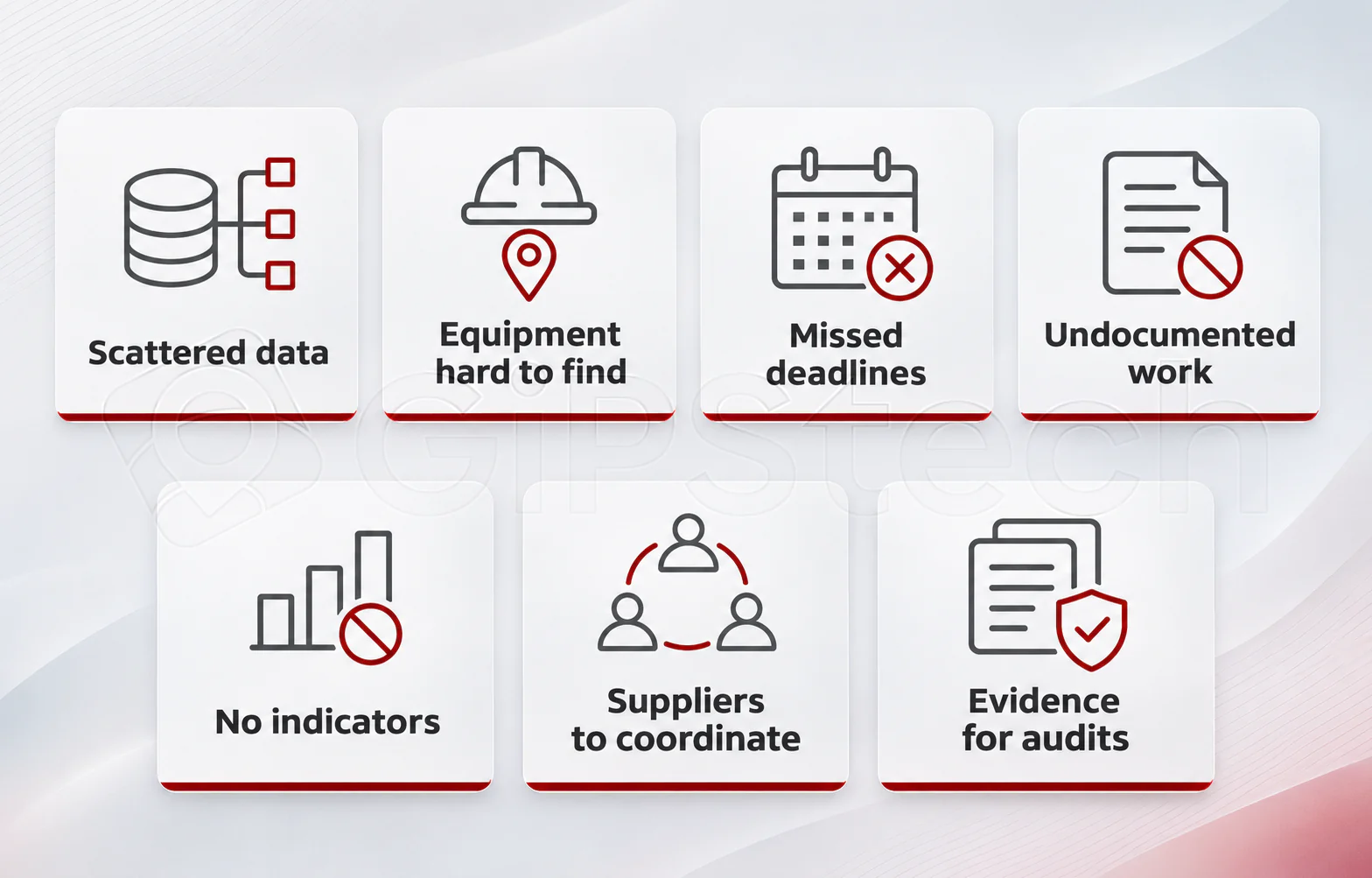
Equipment nobody can find. Knowing an item exists is insufficient when it moves. Position information can guide the search, but must be interpreted according to its source and freshness. Asset tracking distinguishes real-time searching from a last known location: these offer different assurances.
Missed deadlines. A list of dates separate from assignments makes it hard to understand what remains to be done. Plans and activities connect scheduling to the work required. Frequencies, priorities and team capacity must still be defined: a calendar does not itself create the necessary time.
Undocumented work. “Done” may be insufficient to establish which checks took place and which anomalies were found. Checklists and structured records collect comparable data, provided the questions are relevant and people record actual outcomes. Different maintenance strategies require different information.
Missing indicators. Comparing what was planned with what was recorded requires common definitions of activities, times and outcomes. Maintenance KPIs help formulate questions for the data. Not every indicator is already available in every installation: the collected measures, formula and scope of the report used must be checked.
Suppliers to coordinate. An assignment should identify the asset, expected result and responsibilities. Assignments and records can provide a common reference between those carrying out the work and those reviewing it. Access and data visibility must be designed for authorized people; inviting a supplier does not replace contractual agreements and responsibilities.
Audit evidence. Reconstructing an activity is easier when the asset, checks and outcomes stay connected. However, available records alone do not ensure compliance or a successful audit: reliability, completeness and the requirements of the process being assessed matter.
A fictional example
Section titled “A fictional example”At the imaginary Aurora plant, the equipment inventory is held in a spreadsheet and inspection reports arrive by email. An inspection appears in the schedule, but the manager cannot find its outcome. The first goal can be simple: connect each inspection to the correct item and make outstanding assignments recognizable.
Evaluation should extend beyond the number of records entered. Can the manager reconstruct an intervention without searching separate archives? Do technicians understand which data to collect? These are acceptance criteria to agree upon, rather than results that are already guaranteed.
When software is not enough
Section titled “When software is not enough”Inconsistent data, ambiguous procedures and missing responsibilities remain problems in digital form. Time is needed to prepare records, involve users and check working conditions, including field connectivity.
Phased adoption helps select a priority problem that can be measured. What Asset2Work is explains how platform capabilities combine, without assuming every organization needs to adopt all of them.