


 Italiano
Controlling an outsourced service means comparing what was agreed with what was performed and verified. Outsourcing transfers activities to a supplier but does not remove the need for objectives, knowledge of assets or client responsibility. A work record is useful when it supports reconstruction of exceptions and disagreements as well as the number of claimed activities.
Activities and outcomes
Section titled “Activities and outcomes”A contract may describe activities to perform, such as periodic checks, or emphasize outcomes, such as availability of a function under defined conditions. Both approaches can coexist. An outcomes-based agreement needs to explain how the result is measured, which resources and decisions remain with the client, and how events outside the scope are handled.
An Italian global service maintenance contract integrates services and responsibilities around results. UNI 10685:2007 (opens in a new tab), listed as current by UNI, provides criteria for this kind of contract. UNI 11136:2004 (opens in a new tab), also current, addresses the preparation of property-maintenance global service processes, from the client’s request to suppliers’ offers. These names do not themselves guarantee a better outcome.
Establish the initial scope
Section titled “Establish the initial scope”An initial asset and condition baseline describes the estate and conditions used as a reference: equipment, locations, quantities, documents, observed condition and any deficiencies. It should distinguish pre-existing conditions from changes during the contract. The asset lifecycle explains why acquisitions, transfers and disposal require updates.
Adding equipment without updating scope can make cost and delay comparisons misleading. Rules are needed for approving changes, accepting initial information and retaining the version used in each assessment. An initial snapshot that is never updated is insufficient for governing years of service.
A common reference for checks
Section titled “A common reference for checks”Shared information includes the assignment, object, deadline, execution, outcome and check. Information about potential penalties can form part of that comparison, but a record does not itself decide their application. SLAs establish rules and measures; KPIs describe trends that still need interpretation.
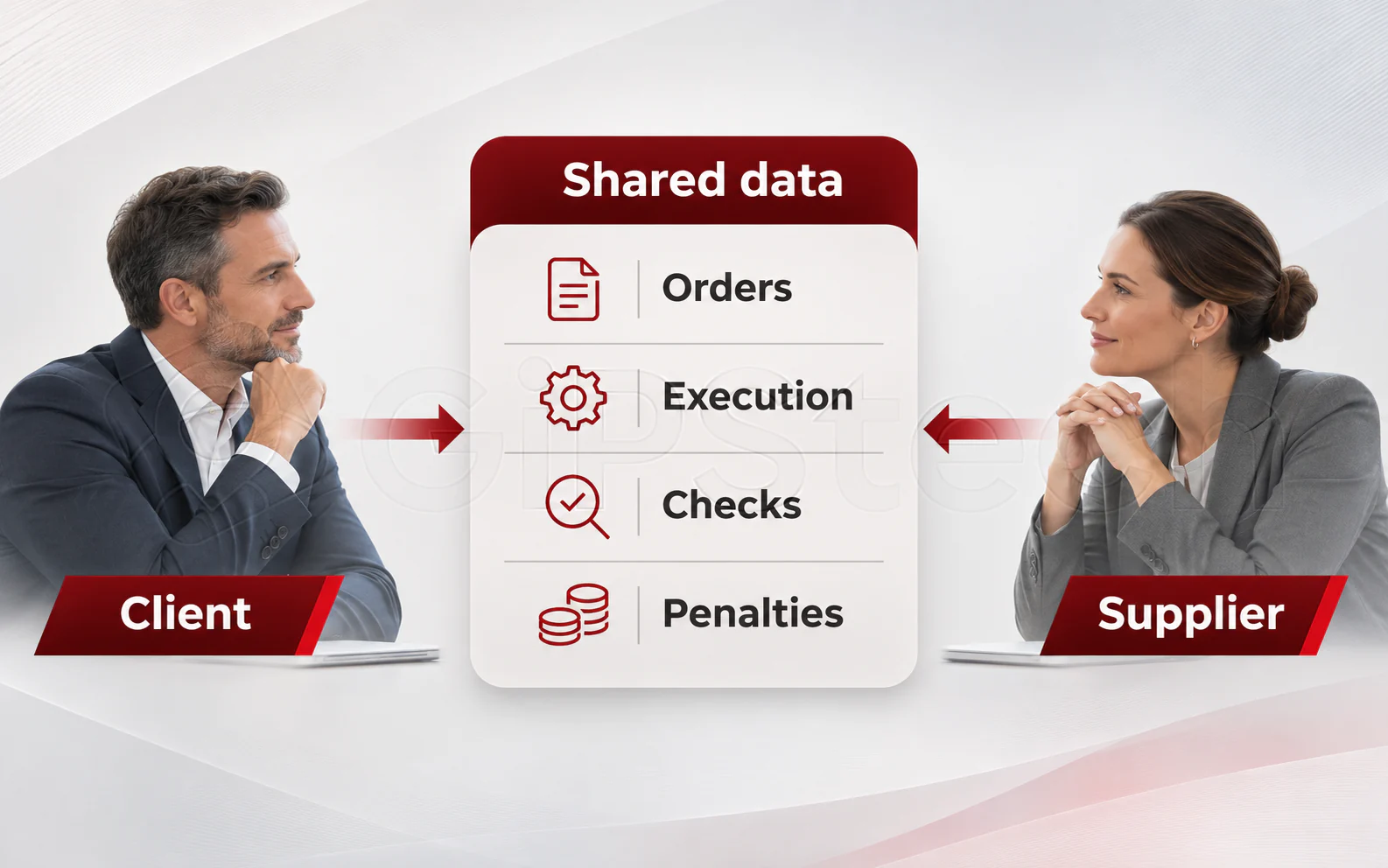
Sharing does not mean unrestricted access. Establish who may read, enter, correct and accept information, protecting personal data and material unrelated to the service. At the end of the relationship, arrangements for returning history, formats and retention responsibilities also need to be clear so that the client does not depend on inaccessible archives.
An imaginary example
Section titled “An imaginary example”Aurora campus outsources maintenance for two buildings. At commencement the client and supplier compare the equipment register and record one item already unavailable. During the quarter a new unit enters the service through an approved variation.
A review identifies a delay. The comparison uses the original assignment, service calendar, documented pause and inspection result. The client can distinguish failure to meet the agreement from delay caused by access to the premises. The conclusion must be justified under the contract rather than inferred automatically from a dashboard colour. Recording the basis for the decision also makes later reviews more consistent.
Checks, limitations and public contracts
Section titled “Checks, limitations and public contracts”UNI EN 13269:2016 (opens in a new tab) guides private maintenance contracts; it does not determine rights and obligations or rules for agreements with public authorities. Italian public contracts are governed by Legislative Decree 36/2023 (opens in a new tab), applicable amendments and the specific procurement documents. The management concept of global service should not be confused with a legal classification supposedly determined by the contract name alone.
Control requires competent people, timely information and the ability to challenge deviations. Purchasing software or accumulating reports is insufficient. This article is explanatory and does not replace legal or regulatory advice: check current official texts. For context see facility management and GiPStech’s Asset2Work overview (opens in a new tab).