


 Italiano
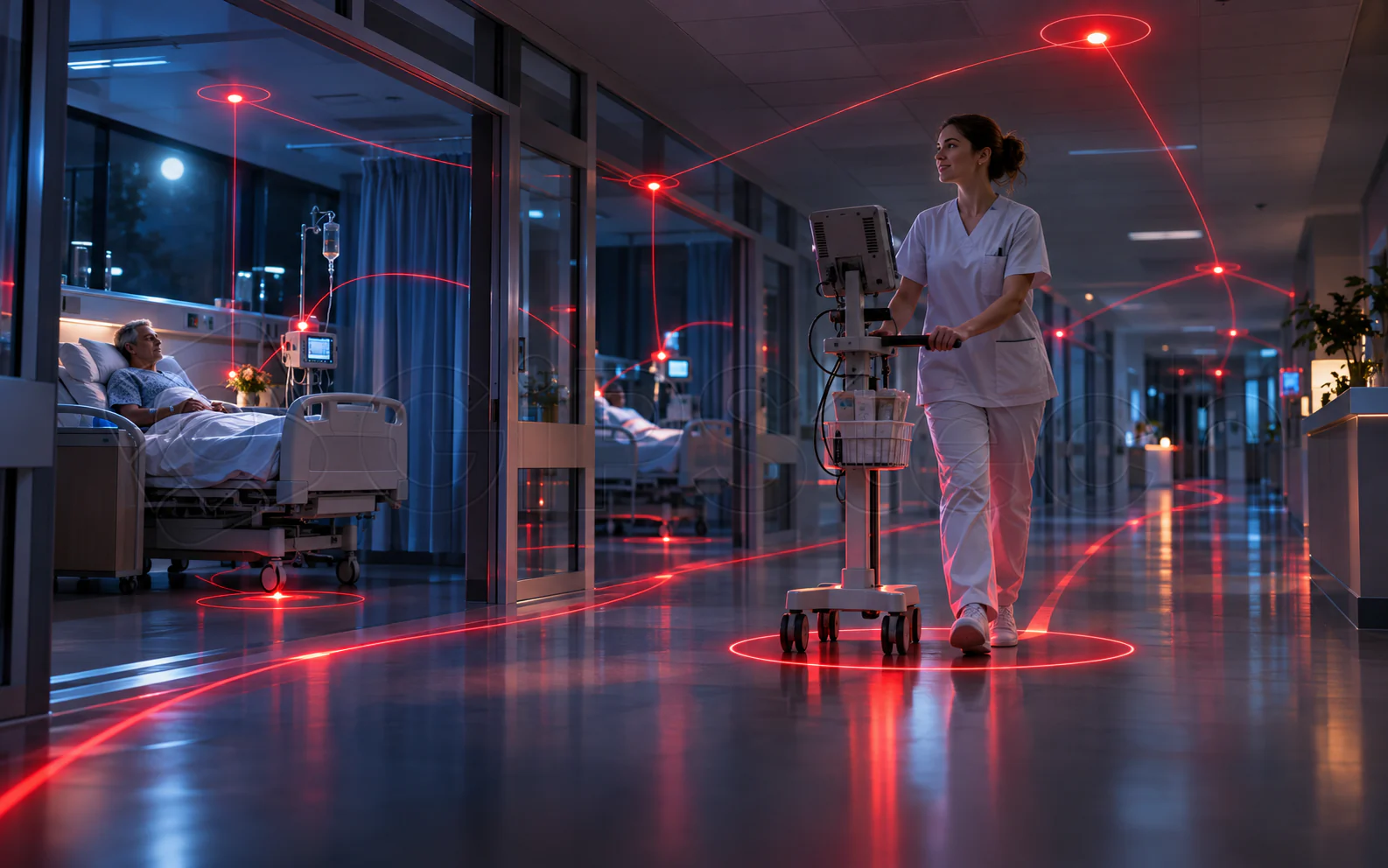
In a hospital, finding equipment, knowing whether it can be used and identifying its next check are different questions. Operational management needs to connect them while keeping location separate from technical condition, and an activity record separate from correct execution. Clinical engineering, maintenance teams, service managers and ward staff contribute different expertise.
Equipment and installations need clear responsibilities
Section titled “Equipment and installations need clear responsibilities”Clinical engineering organizes the technical management of healthcare technologies within its remit. A mobile device and a fixed installation may both be important to the service, but require different documentation, expertise and checks. Planning needs to consider manufacturer instructions, operating conditions, criticality and applicable requirements, including what happens when equipment is taken out of service.
IEC 62353:2014 (opens in a new tab) concerns recurrent testing and testing after repair of medical electrical equipment. The Italian adoption, CEI EN 62353 (opens in a new tab), published in November 2015, includes a national annex. These tests do not amount to a fresh assessment of conformity with design standards; this article does not prescribe measurement methods, thresholds or universal intervals.
Regulation (EU) 2017/745 (opens in a new tab) concerns medical devices. This differs from organizing maintenance work: purchasing software or completing a checklist does not automatically demonstrate fulfilment of the applicable obligations.
Cleaning, continuity and the quality of evidence
Section titled “Cleaning, continuity and the quality of evidence”Cleaning services need areas, frequencies, responsibilities and inspection criteria consistent with the facility’s protocols. In Italian procurement, the environmental criteria for cleaning and sanitation (opens in a new tab) in Ministerial Decree No. 51 of 29 January 2021 include an annex for healthcare settings. Read it alongside subsequent amendments (opens in a new tab) and the version applicable to the contract.
Recording a team’s visit helps reconstruct service delivery; it does not alone measure sanitation effectiveness or demonstrate a reduction in healthcare-associated infections. Appropriate checks and assessment by competent professionals remain necessary. Similarly, for fire protection systems, the Italian Decree of 1 September 2021 and subsequent updates (opens in a new tab) require activities, responsibilities and qualifications to be distinguished.
From location to activity
Section titled “From location to activity”Asset tracking can help find equipment moving between wards. Coverage, accuracy, update frequency and devices need validation in the actual facility. A known location does not certify that an item is free, clean or suitable for use.
In Asset2Work, an asset can have a location reference, and plans can generate activities linked to that asset. This relationship supports the organization of preventive maintenance; technical validation of the plan and authorization to return equipment to use remain organizational responsibilities. GiPStech’s healthcare solutions (opens in a new tab) explain the relationship between localization and operational work, which needs to be sized for the project.
A coordination example
Section titled “A coordination example”In a fictional hospital, two wards share a family of mobile devices. Before extending tracking, the working group agrees who updates technical status, who manages return after maintenance, and how to handle cases where location is outdated. The inspection plan remains separate from urgent requests.
The pilot compares search time, overdue checks and documentation completeness. It uses no patient data and does not assign tracking the role of establishing clinical suitability. The expected benefit is coordination that can be checked, to be confirmed by the results collected.
Evidence and compliance remain distinct
Section titled “Evidence and compliance remain distinct”UNI EN 15224:2017 (opens in a new tab) concerns the quality management system for healthcare services. Reliable records can support audits and accreditation processes, but do not replace requirements, assessments and decisions by the competent bodies.
This is an educational article using European and Italian references. It does not replace legal, regulatory or clinical advice. Check current official texts and their applicability to the facility.